ST photo: Gavin Foo
A Deal That’s Hard to Ignore
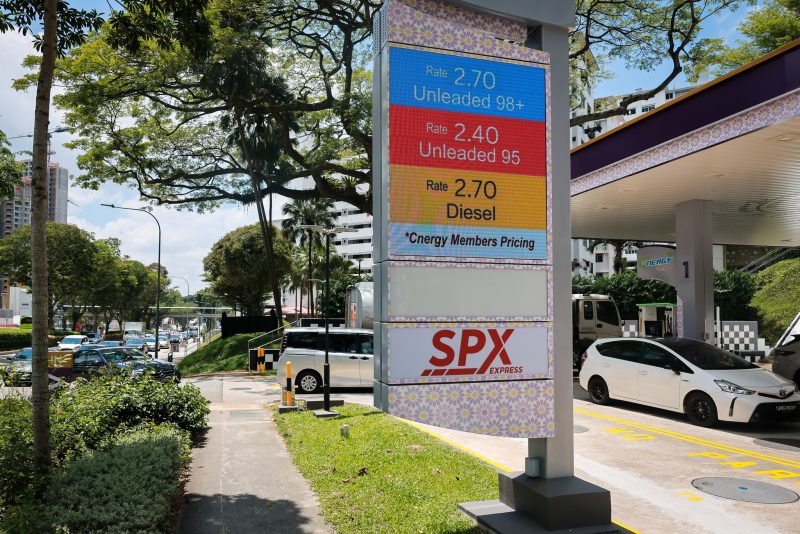
Cnergy’s RON95 has recently been priced significantly lower than most major fuel brands in Singapore — at times close to $1 per litre cheaper. In a market where fuel prices have been steadily climbing, that kind of difference is hard to ignore.
For many drivers, the answer is simple. Yes, it is worth the queue.
Saving on a full tank can easily translate into meaningful cost reductions, especially for those who drive frequently. As a result, more motorists have started making their way to Cnergy outlets across the island, hoping to take advantage of the lower prices.
But as demand increases, so does something else.
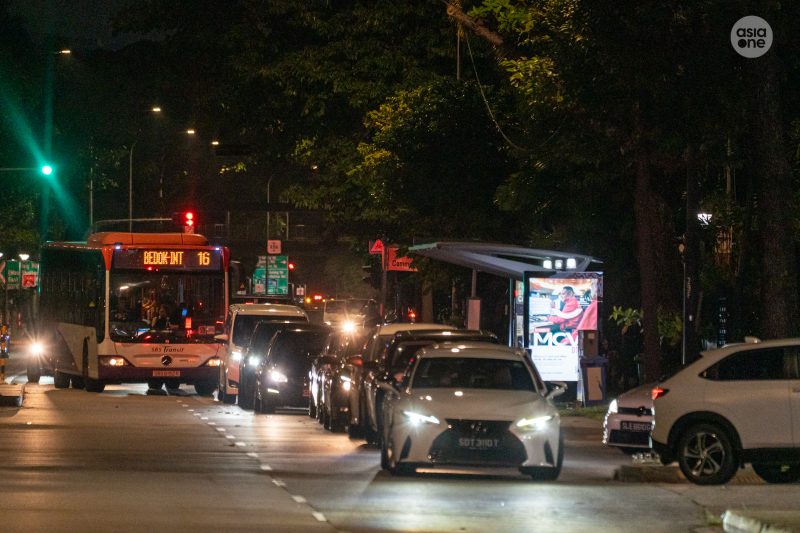
Photo credits: AsiaOne / Shafiq Apandi
When the Queue Spills Onto the Road
At outlets such as the Dunman station, queues have grown noticeably longer in recent weeks. What begins as a line within the petrol station can quickly extend beyond its premises, spilling onto nearby roads and affecting surrounding traffic.
This is where the situation starts to shift.
Drivers passing through the area may find themselves slowed down by vehicles waiting to enter the station. Nearby junctions can become harder to navigate, and access points may be partially blocked during peak periods. Public transport is not spared either, with buses experiencing delays when roads become congested.
What started as a simple decision to save on fuel has, in some cases, turned into a broader traffic concern.
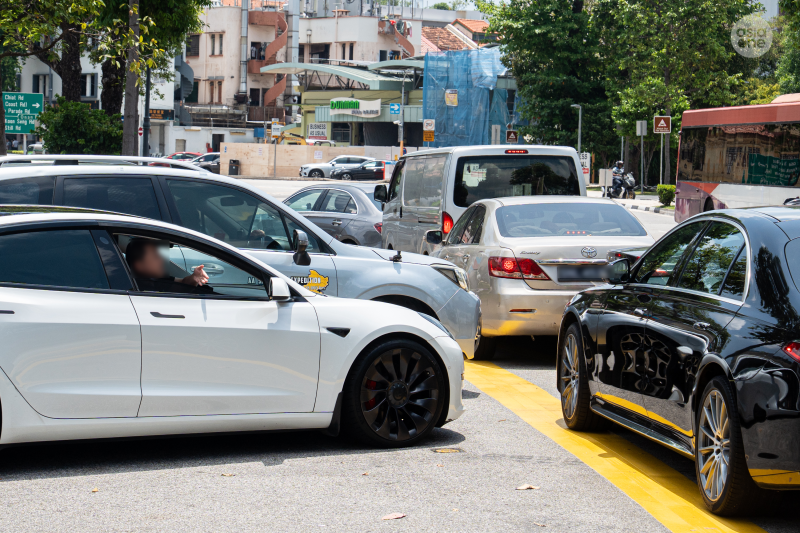
Photo credits: AsiaOne / Shafiq Apandi
The Real Issue Isn’t Just the Price
While the lower price explains the surge in demand, the situation on the ground reflects something more than just cost-driven behaviour.
In Singapore’s tightly managed road network, space is limited and traffic flow depends heavily on cooperation between drivers.
When queues extend into active roads or disrupt normal traffic patterns, the impact is felt far beyond the petrol station itself.
The issue is not the presence of a queue, but how that queue is formed and managed.
When vehicles block junctions, occupy lanes not meant for waiting, or attempt to enter from multiple access points, it creates unnecessary friction on the road.
Even small disruptions can quickly escalate, especially during peak hours or in high-density areas.
Steps Taken to Improve the Situation
Operators like Union Gas have started implementing measures to better manage these situations on the ground. At the Dunman outlet, traffic cones have been deployed to regulate entry and reduce instances of queue cutting, helping to create a more structured flow of vehicles into the station.
These efforts reflect an awareness of the challenges and a willingness to improve the experience for both customers and other road users.
However, operational measures alone cannot fully resolve the issue.
Where Drivers Make the Difference
Ultimately, the effectiveness of any traffic management effort depends on how drivers respond.
Choosing to join a queue that has already extended onto the main road, or attempting to bypass it through side access points, may seem like small decisions in the moment. But when repeated across multiple vehicles, they contribute to the larger congestion problem.
Being mindful of surrounding traffic conditions, allowing space for junctions to remain clear, and respecting the natural flow of vehicles can significantly reduce disruptions. These actions not only help improve the situation at the petrol station, but also ensure that other road users are not adversely affected.
In a shared road environment, individual behaviour carries collective impact.
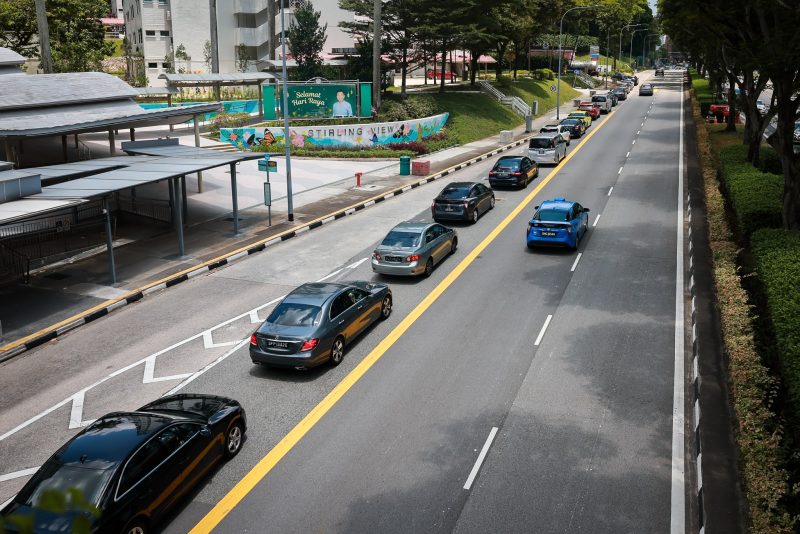
ST photo: Gavin Foo
So, Is It Still Worth the Queue?
There is no denying that cheaper fuel presents real savings. For many drivers, the value proposition remains strong, especially in the current climate of rising prices.
But the question is no longer just about whether it is worth queuing.
It is about how that queue is handled.
When managed well, it remains a minor inconvenience. When not, it becomes a source of congestion that affects an entire stretch of road.
A Timely Reminder for All Motorists
As fuel prices continue to fluctuate, similar situations may arise at other locations offering competitive pricing. The demand for affordability is unlikely to change, but how it plays out on the roads can.
The situation at Cnergy’s Dunman outlet serves as a timely reminder that while saving on fuel is important, it should not come at the expense of road safety and consideration for others.
In the end, smoother traffic conditions are not just about infrastructure or pricing — they are shaped by the collective behaviour of every driver on the road.
Have a story to share?
Accidents occur frequently, but as responsible road users, we can collectively contribute to reducing their frequency.
If you or someone you know has a video or story to share, please do not hesitate to email us at writer@roads.sg
Together, we can all contribute to creating safer roads for everyone.